
Explorations and Experiments.
Browse topics


Gaming the System.
At the heart of both meaningful teaching and deep gameplay is the separation of our usual selves from our “learning” or “ludic” selves - between the everyday me and the “student” or “player” me. Who I am in the classroom or in the game is, in an important sense, a temporary me. This is a me that can experiment freely, make mistakes without fear, try new roles and rules, iterate, change, and shift. I can adopt new identities, new judgments, and try new activities.
As Little Design as Possible.
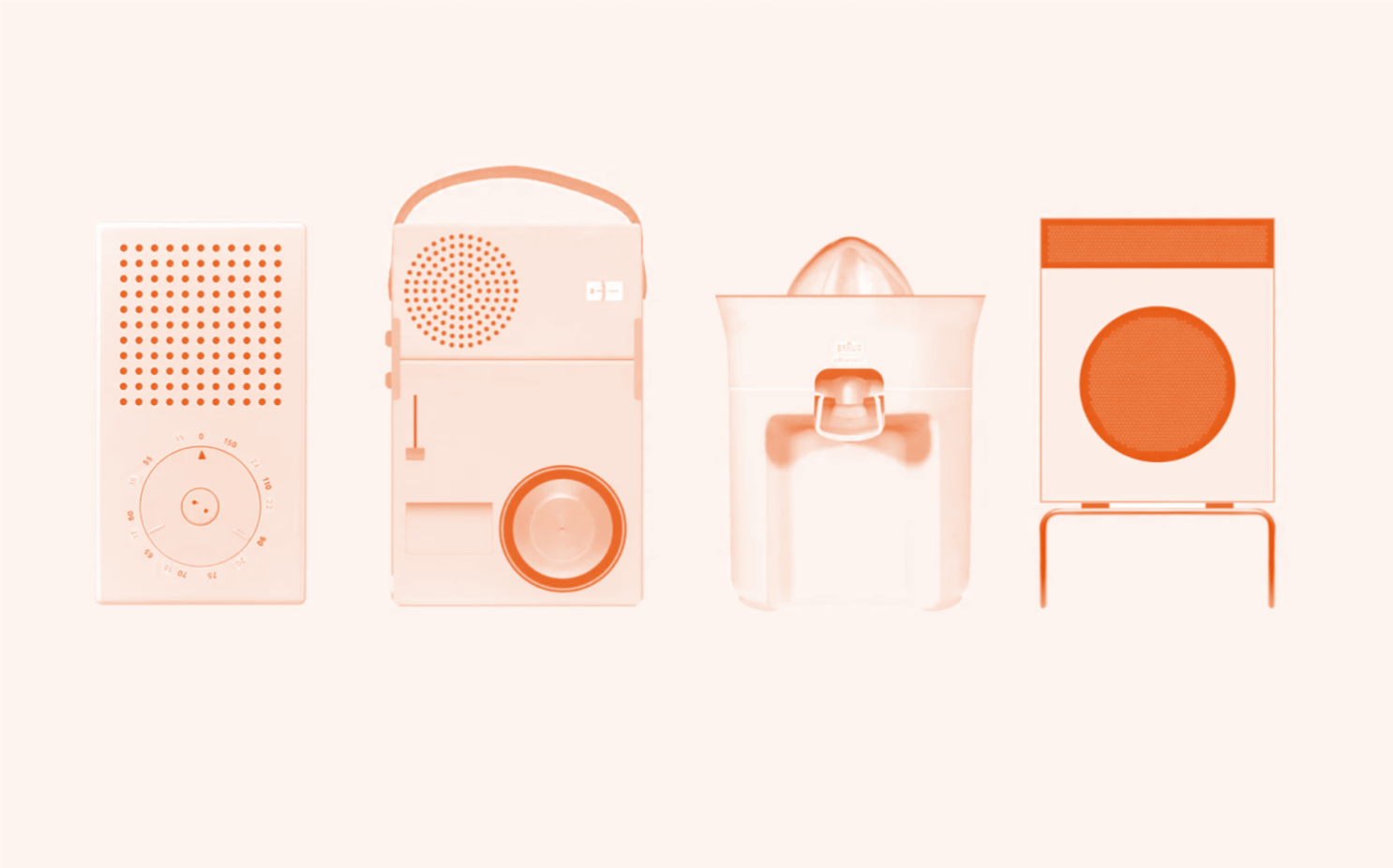
I’ve long advocated that, whatever field or discipline you work in, you should always be looking at what is happening elsewhere. That might be in neighbouring industries or practices, but it might also be in fields that are very distant from your own. As a learning experience designer, I’m keenly interested in the work of designers in a whole range of industries - game design, architecture, graphic design and, of course, product design. I’m looking at what’s happening in these different disciplines to see if there is anything exciting, interesting, or innovative that I might find use for in my work as a designer. What, then, might a learning experience designer, take from Dieter Rams’ 10 Principles of Design?

Pausing.
In his interview with Japanese animation legend Hayao Miyazaki on the release of his masterpiece Spirited Away, Robert Ebert asked Miyazaki about the moments of rest in his films. Moments that showed what Ebert called “gratuitous motion” - a character sighing, sitting for a moment, looking to the distance. Moments that didn’t serve to advance the plot, or provide the audience with action, or provide comedy or drama in themselves.

Graphic design.
I used to do quite a bit of graphic design, especially when I was at university. I remember teaching myself basic photoshop from online tutorials in my late teens and then spending a lot of my time, once I got to university, designing posters for plays, college balls, club nights, charity events and things like that. I’ve still got a reasonable eye for good graphic design, I think, but it seems like my decades old skills have pretty firmly rusted up and - shocking as it may be - photoshop has changed a little in the intervening years.

Trusting the process.
I've been designing some 1 day online workshops lately and I've been having trouble with one particular workshop. It just wasn't clicking for me, and I couldn't "see" the design as I could with the others. I like to think about the workshops I'm designing for a little while and let my subconscious go to work until things fall into place - and usually, that works pretty well. For some reason though it just wasn't working for me this time. I spent some time noodling away at it but wasn't really making any progress.

Thinking on a bigger scale
When I was a teacher, and had all the space of a classroom, it was very common for my students and I to be working away on huge sheets of A1 paper - drawing out some idea, or mindmapping a text we were studying, or collecting our thoughts together on some topic. We’d then tape them all up on to the way to have an even bigger frame of reference for our thinking.

Design Thoughts.
I’m not a graphic designer by trade but graphic design does mean a lot to me and I’ve always had an eye for, and appreciation of, great design. Much in the words of that brilliant Ira Glass aphorism, I’ve got good taste in graphic design but my own skills… well, they’re not quite so developed yet.

The Creative Act by Rick Rubin.
Over the last few days, I’ve been making my way, slowly and intermittently, through Rick Rubin’s incredible book “The Creative Act”. A gorgeous, well-crafted, and thoughtful object in and of itself and a collection of short essays, even sometimes just a few paragraphs in length, all exploring the nature of creativity, the life of the creative person, and the act of creation itself. It’s been a deep pleasure to drop in on the book at different times and in different places and meander through these delicate, reflective passages.

On where I take my brain.
I am fortunate enough to have a home office in which I do most of my work. It’s set up to be a space that works well for me and that I like spending time in. It’s got 1000+ books on the wall, a sofa, pictures and art that I enjoy looking at, a big desk with a big monitor, lots of stationery tucked away in drawers, and lots of technology stored in nicely labelled crates in cupboards. It’s a great space for all kinds of things. Writing emails? No problem. Having Zoom meetings? Fantastic. Doing technical design work? Go for it! But it’s not a great space for creative thinking and for a long time I was struggling to figure out why.
Beyond the Tabletop.
A small group of participants are gathered around a table. The conversation is curious, urgent, and probing. A large piece of paper covers the surface of the table - heavily drawn upon. The participants consult their notes, plans they’ve been making, and various documents. They suggest strategies, and possibilities, and brainstorm ideas. There are flashes of inspiration, realisations, and questions. They’re chewing on a significant challenge that will take all their skill, experience, and resources to resolve. Finally, they come together, having settled on a way forward.

Why Your Next Hire Should be a Philosopher.
In the Ancient Greek city of Miletus, there lived a philosopher named Thales. It is said that he was asked by the people why, if he was so wise, he was also poor. Surely if he were truly wise, they said, he would be a wealthy man. He may have knowledge of science and philosophy, they said, but he seemed to have no skill for using them in the real world. Thales sought to prove these critics wrong. Using his knowledge of meteorology, economics, psychology, and his sharp, analytical mind, Thales devised a plan…

A Facilitator's Manifesto.
My manifesto outlines the big six principles I follow to achieve powerful, innovative, and transformative learning experiences. Everything happens within a relationship. Only authenticity is sustainable. Listen, Ask, Speak. Be what you are looking for. We walk the journey together. And, Let the learning emerge. Taken together these six principles can transform your workshop facilitation, learning and development programme, and learning experience designs.

Grandparent Speed-Dating.
In workshops and training, I have often used the Design Thinking methodology and Problem-Based Learning in conjunction, both in developing workshops and structuring and facilitating them. I have even run workshops that have taught these processes and approaches to teachers and educators which has always proven to be a transformative experience. In those workshops, I’m very often asked to give an example of these at work and so I took some time to write up one of my favourite case studies for Design Thinking and Problem-Based Learning in schools.

Lessons from the Strandbeest.
Skeletal, alien creatures roam wild on the beaches of The Netherlands. Tubular bodies and an array of legs skitter along the sand powered by great sails of white cloth and stomachs of plastic. These creatures have not come from some crashed meteor or alien spacecraft but from the mind of a Dutch inventor, artist, engineer, and creator - Theo Jansen.