10 Great(est) Novels
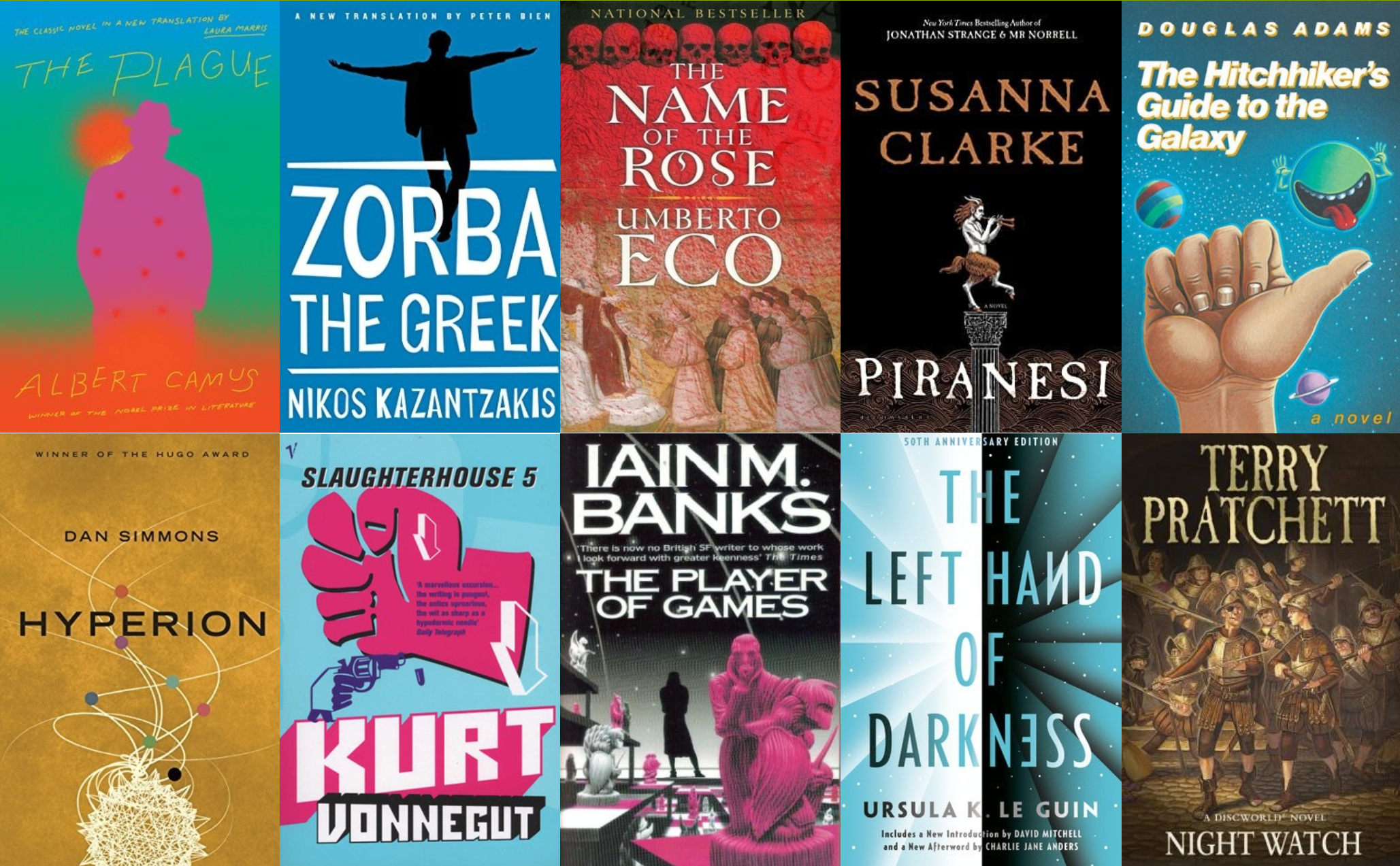
This week The Guardian published a list of the 100 Best Novels. They polled the great and the good of the world of literature, publishing, and authorship and asked a whole cavalcade of people to give their top 10’s. From this, they compiled their top 100. A list of great books - if a little on the dense, worthy, and series side of things. What’s quite fun is finding the list of contributors, and poring through their individual choices to see all the books that didn’t make the cut.
I was not surveyed. More’s the pity. So I thought I would put together my own top 10 list, all the same. As with any personal top 10 list, there’s actually 30, 50, 100 books on this list; these are just the 10 titles of that bookish iceberge that are poking above the water line of my mind right now. Ask me tomorrow, and we’d have a different list, but that’s the great joy of being a human. I will say, my list favours more genre fiction than the stolid Guardian contributors and, I think, has a lot more funny books than theirs. Make of that what you will.
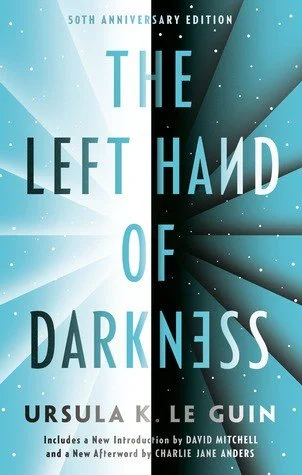
The Left Hand of Darkness – Ursula Le Guin.
Ursula Le Guin remains one of my all-time favourite writers whose work I return to over and over again. Of all her novels, I think The Left Hand of Darkness may well be my favourite, but there are so many extraordinary works to choose from.
A lone human ambassador is sent to the icebound planet of Winter, a world without sexual prejudice, where the inhabitants’ gender is fluid. His goal is to facilitate Winter’s inclusion in a growing intergalactic civilization. But to do so he must bridge the gulf between his own views and those of the strange, intriguing culture he encounters. Embracing the aspects of psychology, society, and human emotion on an alien world, The Left Hand of Darkness stands as a landmark achievement in the annals of intellectual science fiction.
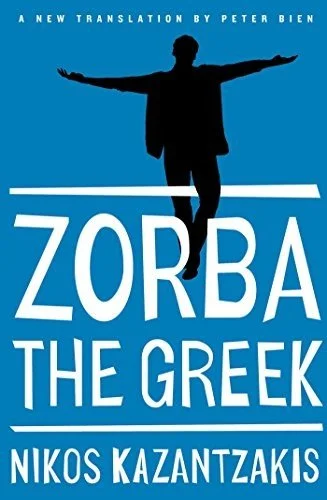
Zorba the Greek – Nikos Kazantzakis
To me, Zorba is one of the greatest existential novels of all time. An incredible literary creation, bold, bawdy, and brilliant, and the kind of character Dostoevsky, Kierkegaard, Nietzsche, or Camus may have come up with had they had a little more sun, sea, and retsina.
Zorba has been acclaimed as one of the truly memorable creations of literature—a character created on a huge scale in the tradition of Falstaff and Sancho Panza. His years have not dimmed the gusto and amazement with which he responds to all life offers him, whether he is working in the mine, confronting mad monks in a mountain monastery, embellishing the tales of his life or making love to avoid sin. Zorba’s life is rich with all the joys and sorrows that living brings
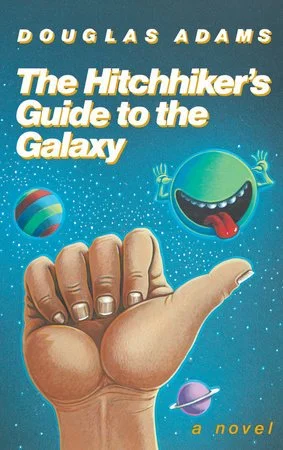
The Hitchhiker’s Guide to the Galaxy – Douglas Adams.
Possibly the book that started everything for me. I still remember exactly where it, and the other four parts of the trilogy (I know) sat on the shelf in our school’s smallish library. A book that showed me something could be clever and funny at the same time.
It's an ordinary Thursday lunchtime for Arthur Dent until his house gets demolished. The Earth follows shortly afterwards to make way for a new hyperspace express route, and his best friend has just announced that he's an alien. At this moment, they're hurtling through space with nothing but their towels and an innocuous-looking book inscribed, in large friendly letters, with the words: DON'T PANIC.
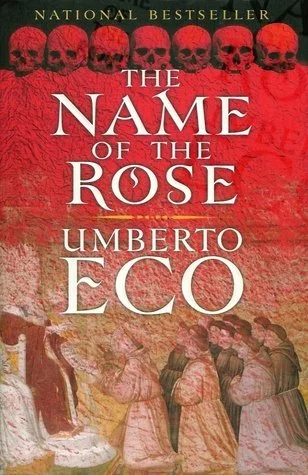
The Name of the Rose – Umberto Eco.
There are scheming monks, a murder mystery, and the Catholic church looming ominously over it all. I didn’t quite click with this when I first gave it a try a long time ago, but giving it a second chance was a really good decision.
Italy, 1347. While Brother William of Baskerville is investigating accusations of heresy at a wealthy abbey, his inquiries are disrupted by a series of bizarre deaths. Turning his practiced detective skills to finding the killer, William scours the abbey, from its stables to the labyrinthine library, piecing together evidence, and deciphering cryptic symbols and coded manuscripts to uncover the truth about this place where "the most interesting things happen at night.
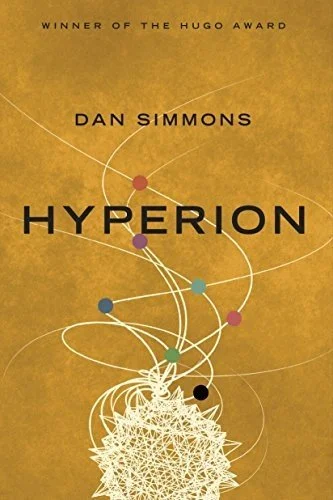
Hyperion – Dan Simmons
Sometimes it’s enormously rewarding to bask in the full horizon of the human imagination, and Simmons gives all that and more in the HyperionCantos. It’s easy to call it The Canterbury Tales in space, but that is very much just the beginning.
It is the 29th century and the universe of the Human Hegemony is under threat. Invasion by the warlike Ousters looms, and the mysterious schemes of the secessionist AI TechnoCore bring chaos ever closer. On the eve of disaster, with the entire galaxy at war, seven pilgrims set fourth on a final voyage to the legendary Time Tombs on Hyperion, home to the Shrike, a lethal creature, part god and part killing machine, whose powers transcend the limits of time and space. The pilgrims have resolved to die before discovering anything less than the secrets of the universe itself.
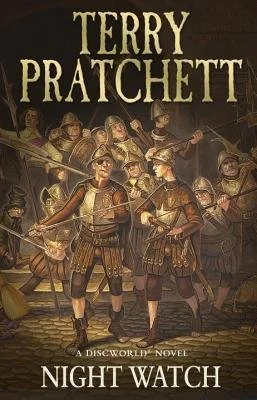
Night Watch – Terry Pratchett.
Pratchett is a thread that runs through my whole life. From picking up Monstrous Regiment from a second-hand bookshop in my early teens, there’s been a Pratchett presence in everything I do. Night Watch may well be the greatest of all the Discworld novels, but it’s a novel that sits in stellar company.
Commander Sam Vimes of the Ankh-Morpork City Watch is in hot pursuit of a serial killer. The trouble is, a well-timed lightning strike has thrown both policeman and pursuer into the city’s past. Now Vimes must relive the history that made him: a cruel regime, a bloody revolution, a corrupt police force, and, most unnerving of all, a keen young recruit named Sam Vimes… Night Watch, is a keen satire about the true nature of political power, and the sacrifices made in the name of the greater good; but also a profoundly empathetic novel about community, connection and the tenacity of the human spirit.
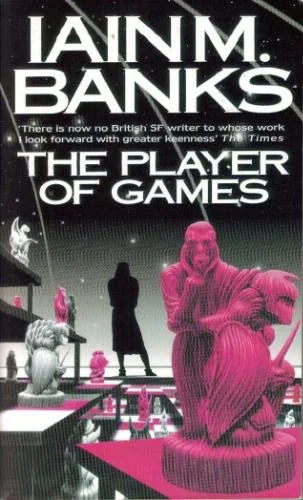
The Player of Games – Iain M. Banks.
A coruscating, mind-expanding symphony of a novel. Banks’ Culture series means a great deal to me in my reading life, and this is the very apex of those books. Vast, powerful, and sublime.
The Culture – a utopian human-machine symbiotic society – has thrown up many expert Game Players, and one of the greatest is Jernau Morat Gurgeh. He is Master of every board, computer and strategy – he is The Player of Games. Bored with success, Gurgeh travels to the cruel and incredibly wealthy Empire of Azad to try their infamous game . . . a game so complex, so like life itself, that the winner becomes emperor. Mocked, blackmailed, almost murdered, Gurgeh plays the game, and faces the challenge of his life – and very possibly his death.
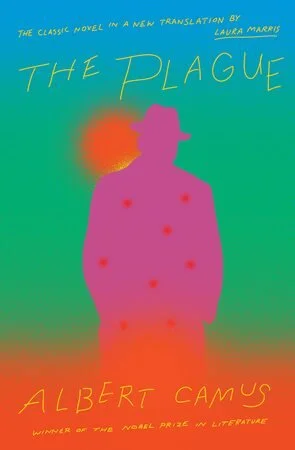
The Plague – Albert Camus.
The Stranger is likely the book of Camus that most people know, but for me, The Plague is his very best. It’s bleak and wrenching in many ways, but the moments of life and hope are all the brighter for it.
The townspeople of Oran are in the grip of a deadly plague, which condemns its victims to a swift and horrifying death. Fear, isolation and claustrophobia follow as they are forced into quarantine. Each person responds in their own way to the lethal disease: some resign themselves to fate, some seek blame, and a few, like Dr Rieux, resist the terror.
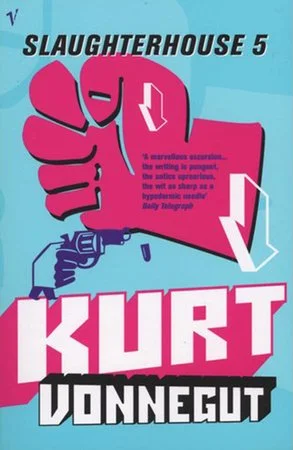
Slaughterhouse-Five – Kurt Vonnegut.
The greatest American novel, for my money. Forget your Gatsbys or your Moby Dicks - Vonnegut gives us all the horrors of war, with the consciousness-scrambling unravelling of a man entirely unstuck in the flow of time.
Centering on the infamous World War II firebombing of Dresden, the novel is the result of what Kurt Vonnegut described as a twenty-three-year struggle to write a book about what he had witnessed as an American prisoner of war. It combines historical fiction, science fiction, autobiography, and satire in an account of the life of Billy Pilgrim, a barber’s son turned draftee turned optometrist turned alien abductee. As Vonnegut had, Billy experiences the destruction of Dresden as a POW. Unlike Vonnegut, he experiences time travel, or coming “unstuck in time.
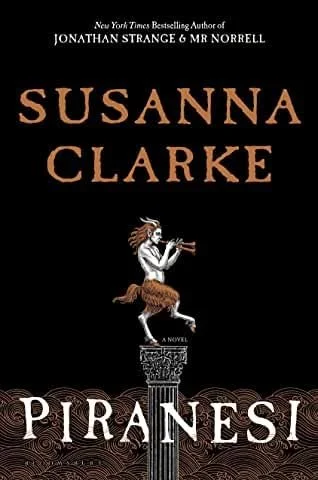
Piranesi – Susanna Clarke
Clarke’s Jonathan Strange and Mr Norrell is a novel (or trilogy of novels) I love - baroque and sprawling and simmering with inventiveness, but Piranesi is on yet another level. More restrained, more thoughtful, and all the more overwhelming for it.
Piranesi's house is no ordinary building: its rooms are infinite, its corridors endless, its walls lined with thousands upon thousands of statues. Within the labyrinth of halls an ocean is imprisoned; and waves thunder up staircases, while rooms are flooded in an instant. But Piranesi is not afraid; he understands the tides as he understands the pattern of the labyrinth itself. He lives to explore the house. There is one other person in the house-a man called The Other, who visits Piranesi twice a week and asks for help with research into A Great and Secret Knowledge. But as Piranesi explores, evidence emerges of another person, and a terrible truth begins to unravel, revealing a world beyond the one Piranesi has always known.